Depression
Thinking of Stopping Your Antidepressant? What to Know First
By C1 · · Medically reviewed — Sochwell, Meerut
If you've opened the news lately, you've probably seen the headlines: governments, doctors and influencers all seem to be arguing about antidepressants at once. For anyone actually taking one, that noise can be unsettling. You might be quietly wondering: should I still be on this?
It's a fair question. Here's a calmer way to think it through.
First: don't make this decision from a headline
The single most important thing to know is this — stopping an antidepressant suddenly can make you feel worse, sometimes badly so. Not because you're "addicted," but because your body has adjusted to the medication and needs time to readjust when it comes off.
The goal isn't to be on medication forever, and it isn't to be off it at all costs. It's to make the right move for you, at this point in your life — with someone who knows your history.
A news cycle can't know your history. Your psychiatrist can.
Why everyone's suddenly talking about this
Two things are true at the same time, and most of the online shouting comes from people insisting on only one of them:
Antidepressants have genuinely helped millions of people — and being scared off effective treatment by fear-based content is its own kind of harm.
Coming off them was under-taught for years — so some people were tapered too fast, or told withdrawal symptoms were "just the illness coming back."
Both are real. Holding both at once is what good care actually looks like.
Withdrawal vs. relapse — the difference that matters
This is the part almost nobody explains, and it's the most useful thing to understand.
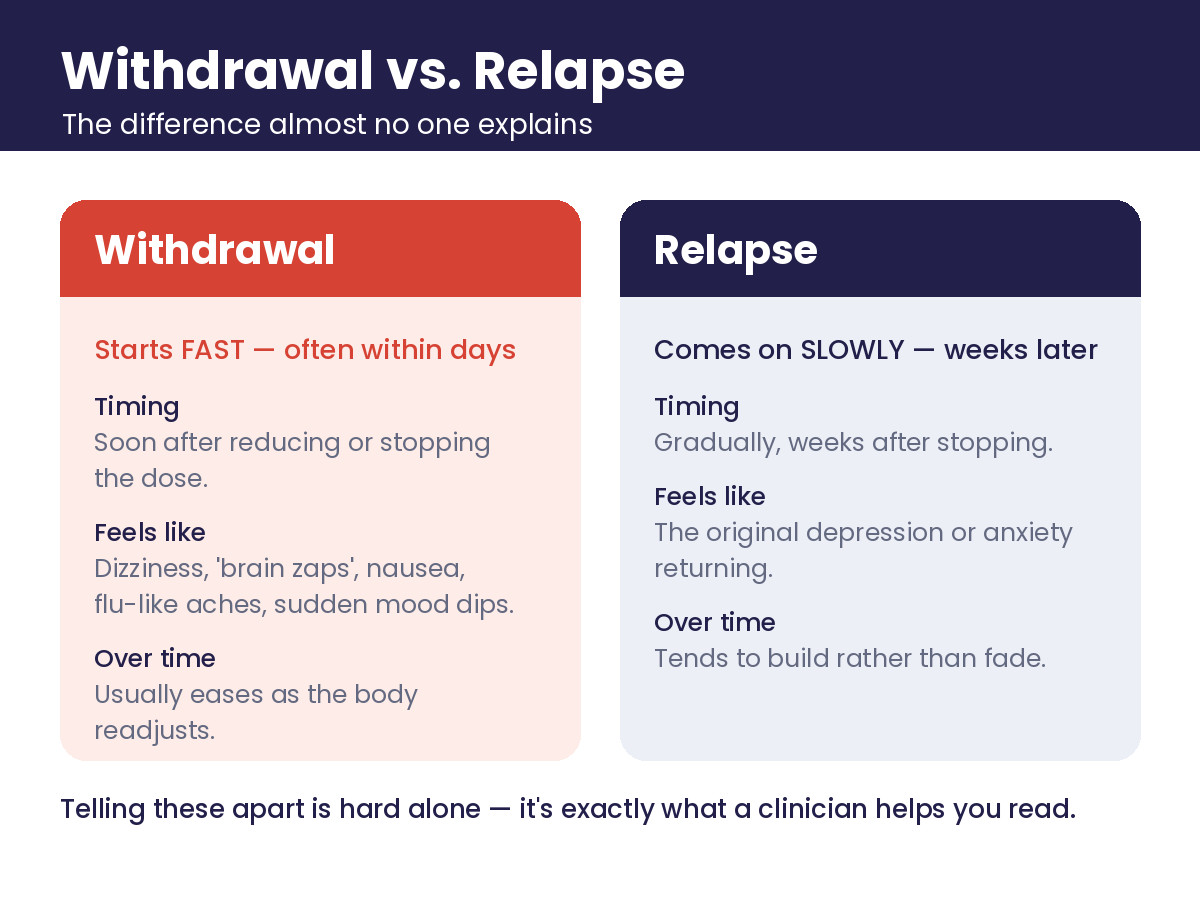
Withdrawal (discontinuation) symptoms tend to start quickly after reducing or stopping — often within days — and can include dizziness, "brain zaps," nausea, flu-like feelings, or sudden mood dips. They usually ease over time.
Relapse — the original depression or anxiety returning — tends to come on more slowly, often weeks later, and looks like the way you felt before you started treatment.
Telling these two apart is hard on your own, and easy to get wrong. It's exactly the kind of thing a clinician helps you read.
If you're thinking about stopping, here's a sane way to do it
Don't stop cold. Book a conversation before you change anything.
Ask about a taper. Coming off slowly, in small steps, is what reduces withdrawal — not willpower.
Pick a stable window. Not in the middle of an exam season, a job change, or a crisis.
Track how you feel. A few notes a day helps you and your doctor tell withdrawal from relapse.
Have a plan B. Agree in advance what you'll do if things dip — so a rough week doesn't become an emergency.
And if you're staying on it — that's not a failure
There's a quiet shame that some people carry about "still" being on medication. Let go of it. Continuing a treatment that keeps you well is not weakness, any more than wearing glasses is. The measure isn't how little medicine you take. It's how well you're living.
The bottom line
The loudest voices this week are arguing about whether antidepressants are good or bad. That's the wrong question. The real one is quieter and more personal — is this the right thing for me, right now? — and it's one worth answering slowly, with someone who knows you.
Published by Sochwell — Dr Akhand Neuro & Brain Care Centre, Sarvodaya Nursing Home, New Arya Nagar, Meerut 250004. Find us on Google.